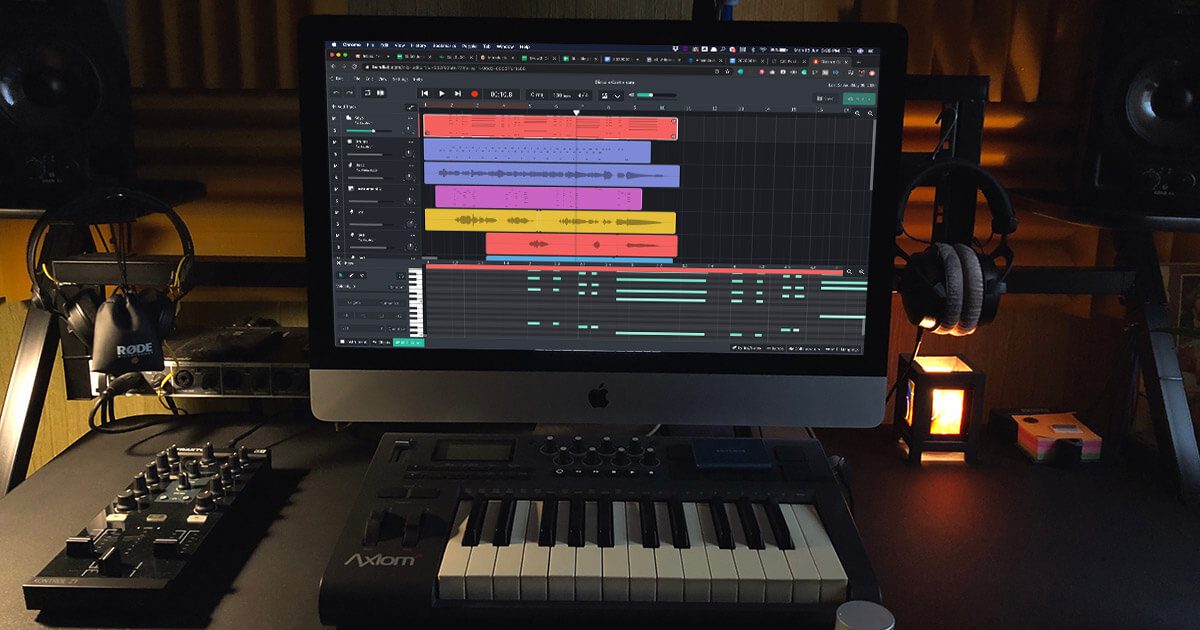
When Apple announced its finalists for the 2025 App Store Awards, one name stood out among the productivity apps, photo editors, and fitness trackers: BandLab. It’s an app that has quietly built a massive following over the last few years, but its spot as an “iPhone App of the Year” finalist confirms what millions of musicians already know — BandLab has become one of the most important creative tools on mobile.
Apple summed it up simply in its release: BandLab helps musicians “record and mix tracks with a community.” That short line captures what makes the app so unusual. It’s not just a pocket studio. It’s a social space where music doesn’t feel like a solo pursuit.
Most music tools expect users to already know what they’re doing. BandLab takes the opposite approach. Open the app and you can start recording almost immediately — no audio interface, no gear, no long tutorial. The layout is clean enough for beginners to understand, but there’s real depth under the hood. Multi-track editing, unlimited cloud storage, vocal effects, sample libraries, virtual instruments, even a built-in mastering engine — it’s all there, though the app avoids drawing attention to how much is going on behind the scenes.
What’s even more interesting is how BandLab treats the process of making music. The developers didn’t stop at the usual feature checklist. They created a system where anyone can share rough ideas, join in on projects from other musicians, or turn a half-finished melody into a polished track with help from the community. It feels more like a living studio than a static piece of software.
The recognition from Apple is partly about technology, of course. Mobile hardware can handle things that required a powerful desktop only a few years ago. But BandLab leans into the cultural side of creativity as well. Its user base is gigantic — well over 100 million — and a large percentage come from places that haven’t always had access to high-end music tools. For them, BandLab isn’t a replacement for a traditional DAW. It is the DAW.
It helps that BandLab appeals to musicians who might never consider themselves “musicians” in the first place. Young artists who start on their phones tend to stick with what works. They trade riffs, beats, and half-finished lyrics inside the app the same way others swap memes. That sense of momentum is hard to bottle up, and it’s something BandLab embraces rather than tries to control.
Apple tends to honor apps that reflect where culture is heading, not just where it is. This year’s finalists lean heavily toward creativity tools, and BandLab fits that trend perfectly. It’s a tool that lowers the barrier to entry without dumbing anything down. The advanced features—stem separation, pitch correction, detailed editing—are there for anyone who wants them, but nothing stops you from simply hitting record and making noise.
The next chapter for BandLab is already unfolding. The company has started adding more AI-driven features, subscription tools for serious creators, and a growing set of services aimed at helping musicians publish and promote their work. Whether those additions push it closer to traditional professional software or in an entirely new direction remains to be seen, but the foundation is strong.
For now, being named a finalist is a milestone that reflects the app’s unusual trajectory. BandLab didn’t rise because of a clever marketing push or a celebrity partnership; it grew because people used it, shared it, and told others about it. In a crowded app marketplace, that kind of organic growth is rare.
BandLab may or may not walk away with the top award this year, but it has already achieved something more meaningful: it has changed who gets to make music, and where that music starts.