
This month Meta made history in wearable AI technology. Their launch of the Ray-Ban Meta Scriber Optics and Ray-Ban Blayzer Optics are the first AI-powered smart glasses built specifically for prescription users. These additions to the Meta Gen 2 Smart Glasses not only make their product accessible for those with corrective lenses, but a lowered price point at $499 makes them more affordable as well. This shifts the glasses from a niche tech device into a lifestyle product, which ironically suggests that the future of making technology less invasive could actually be through further integration. The solution is to make ever-advancing technology invisible, or at least inconspicuous.
Key features and differences between Scriber and Blayzer Optics:
AI-powered smart glasses are not new to the market, but they’ve never been designed with prescription glasses foremost in mind. The Scriber Optics and Blayzer Optics glasses promise to outperform predecessors with Meta Gen 2 hardware and optician friendly features, including:
- 12 MP Camera & 3K video
- 6-microphone array
- WiFi 6 UNII-4
- Slimmer design
- interchangeable nose pads
- optician adjustable temple tips
- AI capabilities including neural handwriting
The actual difference between Blayzer Optics and Scriber Optics comes down to frame design and aesthetic. The choice between them depends on personal preference, with Blayzer being more angular and Scriber being more rounded.
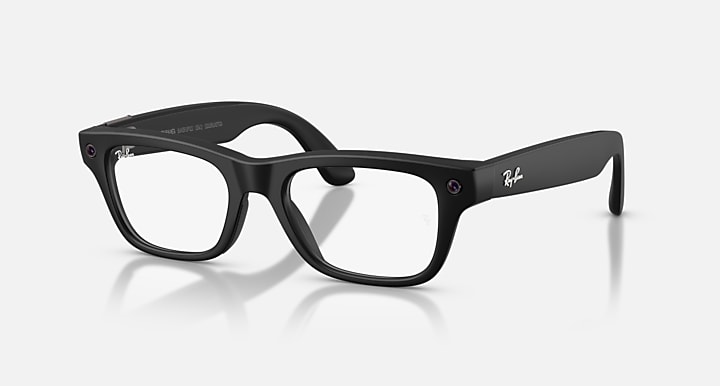
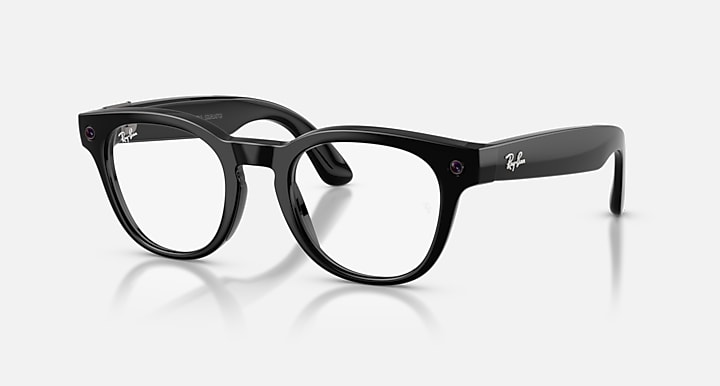
| Category | Blayzer Optics | Scriber Optics |
|---|---|---|
| Frame Shape | Rectangular, more angular | Rounded “Phantos” style |
| Lens Width | ~50–54 mm | ~49 mm |
| Bridge Fit | Wider, rectangular bridge | Narrower, rounder bridge |
| Aesthetic | Modern, sharp lines | Softer, classically rounded |
Retail accessibility and why it’s a big deal
Obviously, these are smarter than your dash sunglasses. But even when considering what these AI-powered smart glasses are, here’s what they are not: the first nor the last of their kind to come. In fact, Meta already has a Gen 3 line-up with an anticipated 2026 launch date. So why are Blayzer and Scriber still so profoundly important? Let’s break it down into two main reasons.
First, the release of Ray-Ban Meta Optic Styles follows a key Marketing 101 principle. In 2025 Meta already owned over 70% of the market share in the smart glasses global market. With such a large share, gory, head-to-head battles with direct competition for the remaining share is not the best use of time and resources. So, what do you do when you’re already leading the market share? You expand the market. About 75% of U.S. adults use corrective lens. Meta Optic’s new capability to cater to that population increases their target audience by . . . billions. And with a $499 price point, the percentage of those who are not only interested but could actually afford to become consumers is no small number. This brings us to the second point of significance, which is that this launch opens up the product to the everyday consumer.
With such a large target population and initiative to meet demand, Meta is pushing their smart glasses as a versatile, everyday product. Their partnership with Ray-Ban especially suggests Blayzer and Scriber Optics as lifestyle-oriented rather than solely for tech-guru’s (though they are welcomed of course). With Blayzer and Scriber Meta heralds the message that wearable AI isn’t just here, but that it could quickly become the norm.
While innovative, this should raise some concerns. Technology is already ever-present to the point of obtrusion, with AI being no exception. And while it is not without its benefits (I mean, some of the results are literally out of this world), adding to the industry could feel somewhat like overkill—or could it be part of the solution?
New stasis: what a screenless future could actually look like
There are undeniable issues with modern technology’s invasiveness and persuasiveness. Too many people (more than we would like to admit) spend too much time (again, more than we would like to admit) glued to a screen. But even in that un-comfortability, we live in an era of unprecedented reliance on technology. While we may reminisce the days when no one worried about screen-time, the truth is that to go back is not practical. We’ve adapted to the fast-paced, interconnected environment, and the only way through is forward. That seems to be where Meta Ray-Bans are taking a step in the right direction.
With a practical and inconspicuous design, Meta Ray-Ban Scriber Optics and Blayzer Optics serve as examples of an alternative to living with our heads craned over a phone. From a glance, they are not even discernable as smart devices, and yet they provide a seamless integration of AI smart technology and advanced hardware into daily life. Meta’s next installment with the Ray-Ban Gen 3 Smart Glasses even advertise themselves as screenless, giving new meaning to what going “screen-free” could mean in the future. These products show that the answer to AI wearables and new tech may not be eradication, but may lie in making their use so seamless that we hardly notice them as anything more than what they are: tools for human ingenuity, human creation, and human progress.
It’s the approach that’s quintessential. The Meta Ray-Ban Smart Glasses highlight (metaphorically and literally) how important it is that we see increasingly advanced, AI-powered tech clearly for what it is—an incredible demonstration of innovation—and more importantly, that we see through it.